Why drying matters more than the cleanup you can see
Once the standing water is gone, a room can look fine and still be wet inside the walls and under the floor. Materials left wet are where secondary damage starts: swelling, delamination, rot, odors and mold. The EPA advises drying wet building materials within 24–48 hours to prevent mold growth (EPA mold guidance). That's the clock we work against.
How we dry a Fordham building
1. Map the moisture
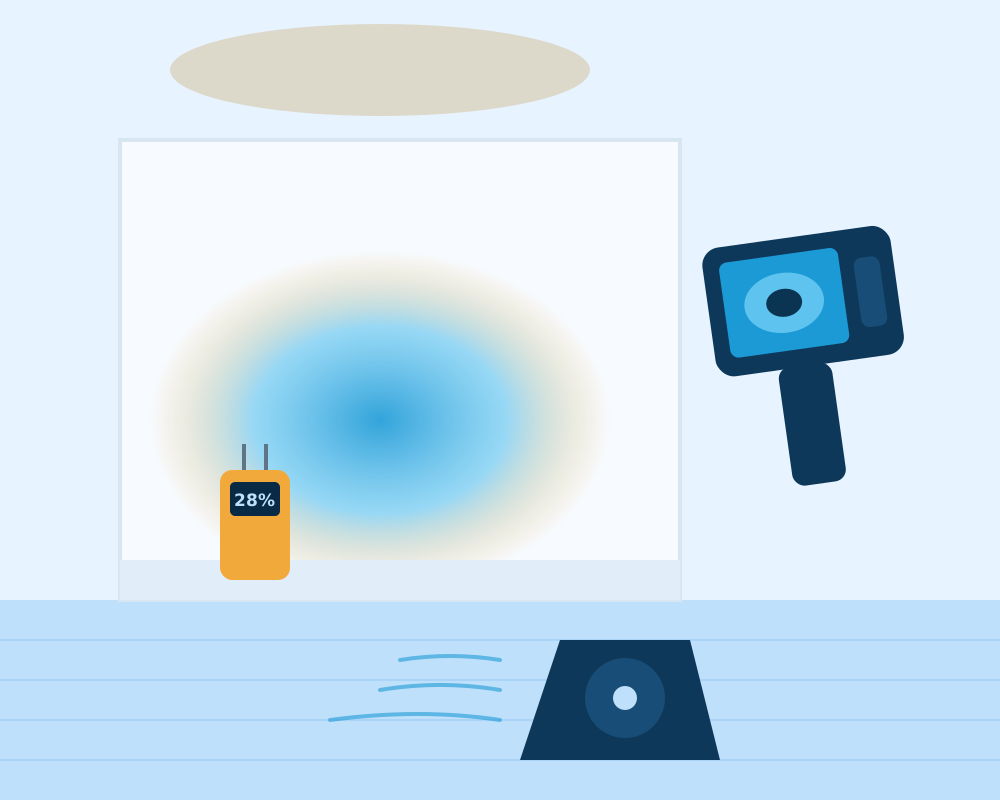
A thermal imaging camera shows temperature differences that usually point to wet areas. Pin and pinless moisture meters confirm how wet each material is. We record readings on a moisture map and take a "dry standard" reading from an unaffected area of the same material, so we know what normal looks like in your building.
2. Set up the equipment
- LGR (low-grain refrigerant) dehumidifiers pull water vapor out of the air, even at the lower humidity levels late in a dry-out.
- Desiccant dehumidifiers for cold spaces like winter cellars, where refrigerant units struggle.
- Air movers push dry air across wet surfaces so water evaporates faster.
- Cavity drying systems push air into wall and ceiling cavities through small holes, so we can often dry plaster and drywall in place instead of tearing them out.
- Air scrubbers with HEPA filtration when contamination or dust is a concern.
3. Manage the space
Drying works best in a closed, warm-ish space. We'll ask you to keep windows closed and leave the equipment running. In winter we manage the heat in the drying area, since cold air holds less moisture and slows evaporation.
4. Measure every day
Each visit, we record temperature and humidity and re-read the materials on the moisture map. We adjust or move equipment as areas dry.
5. Confirm it's dry and document it
We take equipment out when readings match the dry standard, not on a set schedule. You get the readings and photos in a drying report.
Drying older Fordham buildings
| Material | How it behaves | What we do |
|---|---|---|
| Plaster and lath | Absorbs slowly, holds water a long time, heavy when wet | Check ceilings for sagging; dry in place with cavity drying where readings allow |
| Drywall | Wicks water up quickly | Dry in place with clean water caught early; cut out above the waterline after Category 3 |
| Oak and parquet floors | Swells and cups | Floor drying mats plus slow, controlled dehumidification |
| Brick and masonry | Holds a large amount of water, dries slowly | Longer drying time, sometimes desiccant dehumidification |
| Exterior-wall insulation | Stays wet behind a dry-looking surface | Readings decide whether it can dry in place or must come out |
How long will the equipment be here?
Many clean-water jobs take about three to five days. Masonry, plaster and hardwood often take longer, and so does water that sat for a while before extraction. We'll tell you what the readings show each day.
Is the noise and electricity normal?
Yes. Air movers are loud and the equipment uses power continuously. We place it to avoid tripping circuits and keep walkways clear. Please don't turn it off overnight: drying stops when the equipment does.
Mold prevention after water damage
The best mold prevention is fast, verified drying. Where it's needed, we also clean and apply antimicrobial treatment to affected surfaces. If mold is already growing over a large area, it may need a licensed assessor and remediator: in New York State, mold assessment and remediation over 10 square feet are licensed work, and in NYC buildings with 10 or more apartments, Local Law 55 requires licensed professionals for mold over 10 square feet. We'll tell you if you've crossed that line.